
To maintain high visual quality and high compliance, Aura uses a continuous radial ray
gap design of lenslets in the outer area.
It can provide a continuous clear
vision and reduce the image jump no matter how the eye moves during reading.
For-Parents
Aura Profile

Aura
Diversified Segmental Defocus
Optimization Technology
(D.S.D.O.)
256 micro-lenses
(8 rings in total,each ring
contains 32
micro-lenses)
central optical zone
diameter of 9.5mm with an outer
edge diameter of 32 mm
Diversified Segmental Defocus Optimization
Technology (D.S.D.O.)
256 micro-lenses (8 rings in total,each ring
contains 32 micro-lenses)
central optical zone diameter of 9.5mm with an
outer edge diameter of 32
mm
Aura PRO Profile

Aura Pro
Diversified Segmental Defocus
Optimization Technology
(D.S.D.O.)
288 micro-lenses
(9 rings in total, each ring
contains 32
micro-lenses)
central optical zone
diameter of 7.9mm with an outer
edge diameter of 32 mm
Diversifed Segmental Defocus Optimization
Technology (D.S.D.O.)
288 micro-lenses (9 rings in total, each ring
contains 32 micro-lenses)
central optical zone diameter of 7.9mm with an
outer edge diameter of 32
mm
To Reduce Image Jump


No matter how the eyes move,Vision always clear
Clinical Evidence
It is clinically proved that the axial length exhibits a significant decrease after wearing Aura for 30 minutes, compared with wearing single vision glasses. [1]

Axial length (AL) changes in both groups before and after 30 min of reading with the various lenses. Statistical significance was marked as ***(p<0.001). DSDO,Diversified Segmental Defocus Optimization lenses; SVL, Single Vision Lenses.
65%
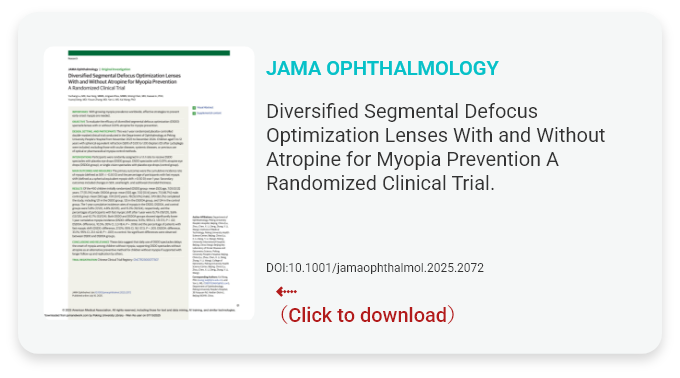
Aura has been clinically proven to slow down myopia progression by 65%,compared to those wearing single vision glasses.[6]


A retrospective analysis using a large longitudinal dataset of myopic and non-myopic eyes from population and clinical studies demonstrated regional and ethnic differences in age-specific axial elongation and SE progression. These regional/ethnic differences were age-specific, where larger differences were observed in younger ages. Moreover, the regional/ethnic differences in axial elongation were observed in both myopic and non-myopic eyes!
Aura can also be used in combination with atropine to increase its efficacy for myopia control and prevention.

Aura and Aura PRO Suitability

Aura
For first time wearer, easier for kids adaption
For pre-myopic kids to prevent myopia occurrence
For elder kids or kids with many outdoor activities

Aura PRO
For kids with fast myopia growth, especially the young
For kids with high myopia or high myopia risk factor
For kids who already wear other myopia control lenses before
For kid with long time daily near distance reading work
Public Literature
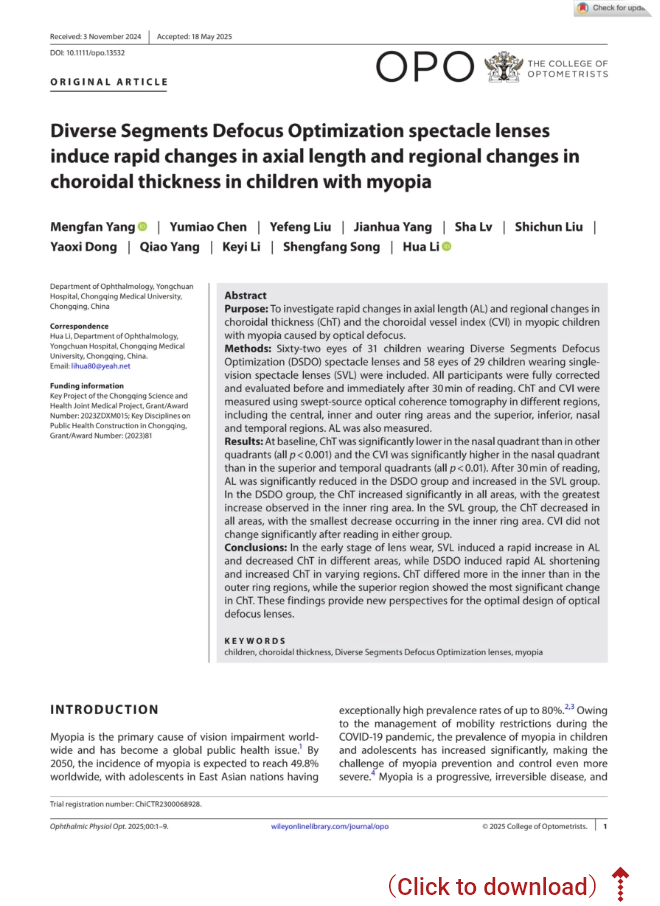
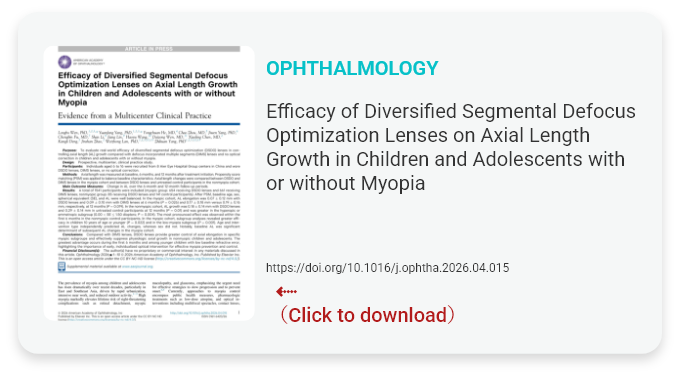
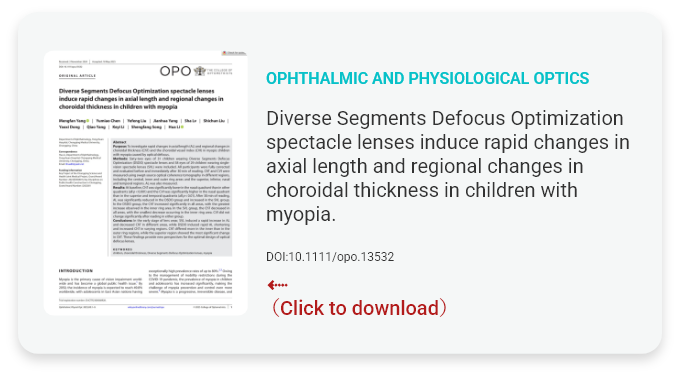
1、Yang M, Chen Y, Liu Y, Yang J, Lv S, Liu S, et al. Diverse Segments Defocus Optimization spectacle lenses induce rapid changes in axial length and regional changes in choroidal thickness in children with myopia. Ophthalmic Physiol Opt. 2025;00:1–9.https://doi.org/10.1111/opo.13532)
2、Significance Effective. “Clinically Significant” Effectiveness Indicator for Myopia Control According to various resources including Efficacy in Myopia Control, Managing Myopia Guidelines Infographic, and the Managing Myopia in Practice poster (English - ANSI - C), as well as the Predictive Analysis of the Prevalence of Myopia in Chinese Students Aged 6 to 18 Years from 2021 to 2030, it is reported that there is significant clinical effectiveness in myopia control in clinical practice. Myopia control products with clinically significant effects are expected to be effective in delaying myopia progression by 50%.
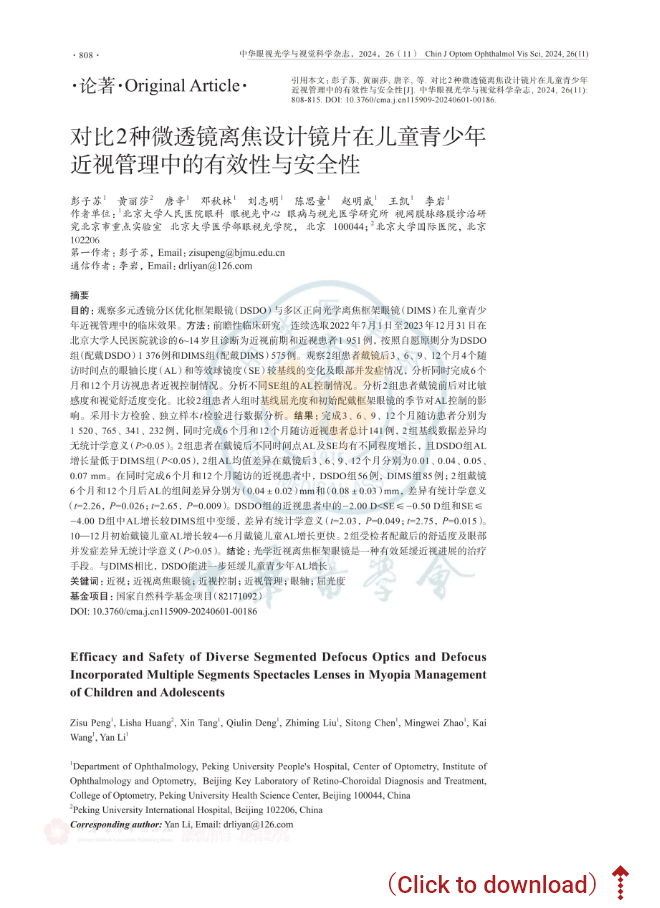
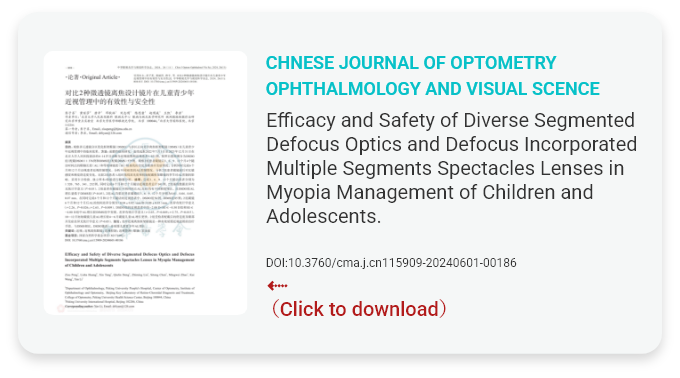
3、Zisu Peng, Lisha Huang, Xin Tang etc.Efficacy and Safety of Diverse Segmented Defocus Optics and Defocus Incorporated Multiple Segment Spectacles Lenses in Myopia Management of Children and Adolescents[J].Chin J Optom Ophthalmol Vis Sci, 2024, 26(11):808 - 815.DOI:10.3760/cma.j.115909 - 20240601 - 00186
4、The “Myopia Management White Paper (2022)” was published by the Ophthalmology Group of the Chinese Society of Ophthalmology, Chinese Medical Association, etc. It was published in the Chinese Journal of Ophthalmology and Vision Science in 2022, with the volume number 24 and issue number 9, and the page numbers ranging from 641 to 648. Its DOI: 10.3760/cma.j.115909 - 20220812 - 00021.
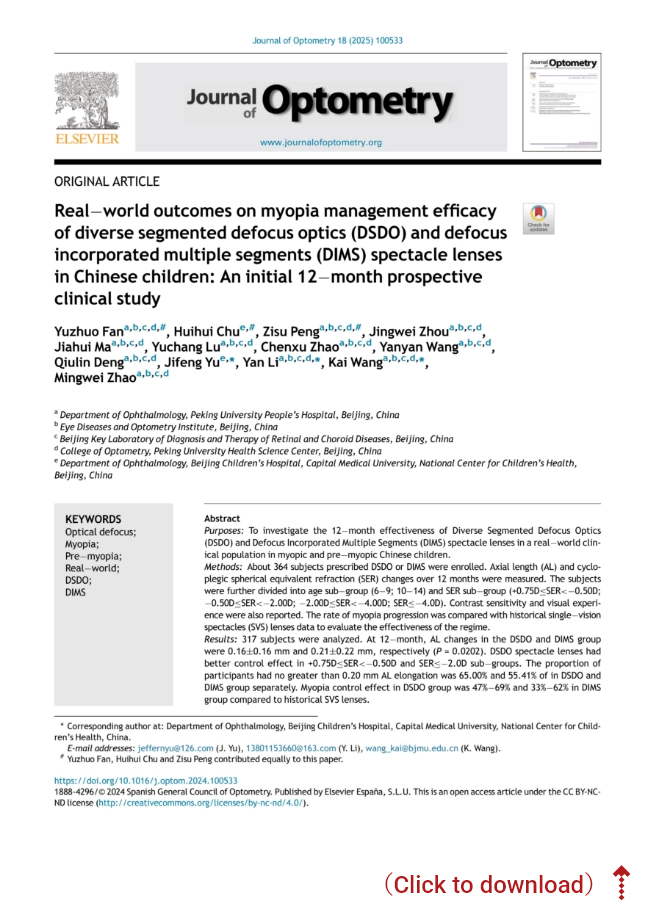
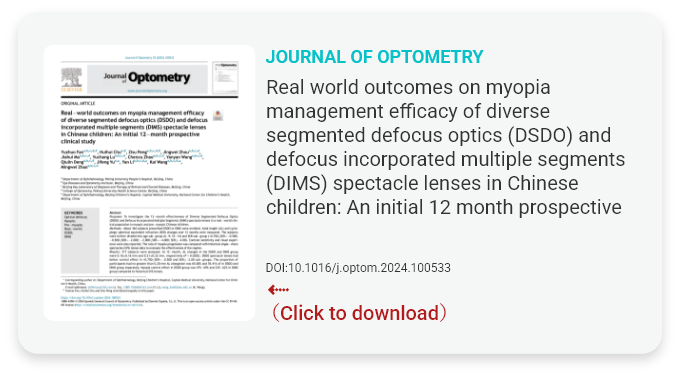
5、Fan, Y., Chu, H., Peng, Z., Zhou, J., Ma, J., Lu, Y.,… & Wang, K. (2025). Real-world outcomes on myopia management efficacy of diverse segmented defocus optics (DSDO) and defocus incorporated multiple segments (DIMS) spectacle lenses in Chinese children: An initial 12-month prospective clinical study. Journal of Optometry, 18, 100533. https://doi.org/10.1016/j.optom.2024.100533
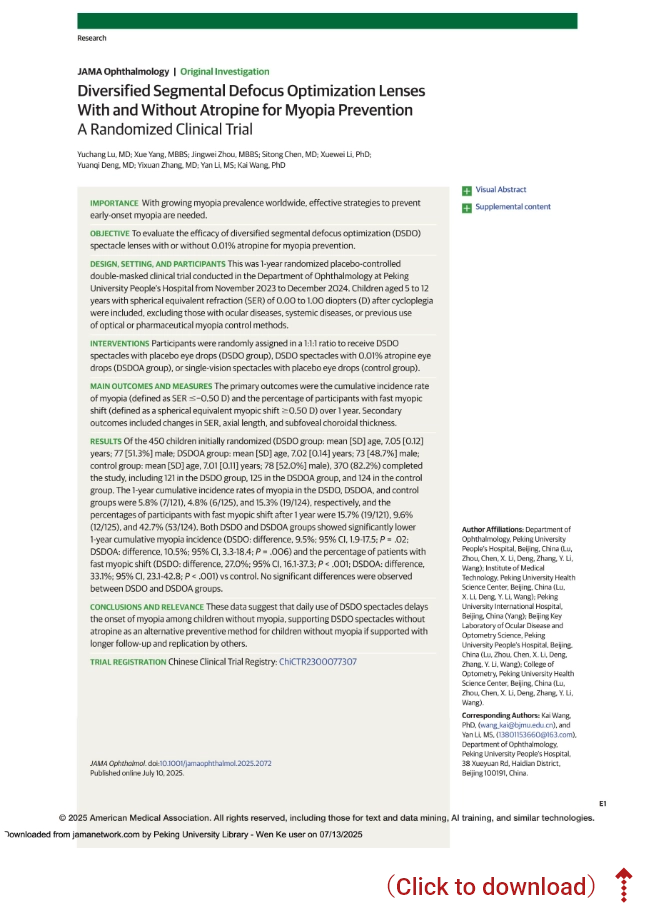
6、Lu Y, Yang X, Zhou J, et al. Diversified Segmental Defocus Optimization Lenses With and Without Atropine for Myopia Prevention: A Randomized Clinical Trial. JAMA Ophthalmol. Published online July 10, 2025. doi:10.1001/jamaophthalmol.2025.2072
7、Naduvilath T, He X, Saunders K, Demir P, Leighton R, McCullough S, … Tünhan N. (2024). Regional/ethnic differences in ocular axial elongation and refractive error progression in myopic and non - myopic children. Ophthalmic and Physiological Optics. DOI: https://doi.org/10.1111/opo.13401